掌握安全常识的英语句子不仅有助于在国际交流中准确表达安全需求,还能在紧急情况下快速寻求帮助或提醒他人注意风险,以下从日常生活、出行安全、网络安全、应急处理四个维度,详细整理常用安全英语句子,并辅以场景说明和表格归纳,最后附相关问答。
日常生活安全
日常生活场景中,安全常识涉及防火、防盗、用电用气等方面,掌握这些句子能帮助家庭和个人规避风险。
防火安全
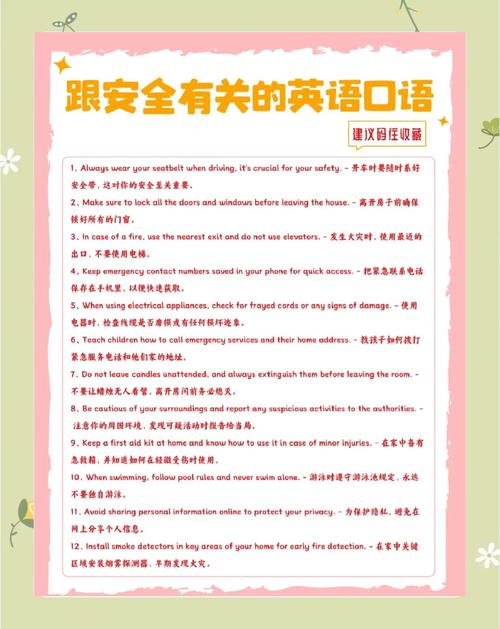
- "Never leave cooking unattended."(做饭时切勿离开现场。)
场景:厨房烹饪时,临时离开可能引发油锅起火。 - "Check smoke detectors monthly to ensure they work."(每月检查烟雾报警器,确保其正常运行。)
场景:定期检测设备能在火灾初期及时预警。 - "Extinguish candles before leaving a room."(离开房间前务必熄灭蜡烛。)
场景:无人看管的蜡烛是常见的火灾隐患。
用电安全
- "Overloading sockets with too many plugs can cause a fire."(插座连接过多插线板可能引发火灾。)
场景:避免一个插座串联多个高功率电器。 - "Do not use damaged electrical cords; replace them immediately."(不要使用破损的电线,应立即更换。)
场景:破损电线易导致漏电或短路。 - "Keep water away from electrical appliances."(让电器远离水源。)
场景:潮湿环境可能引发电器漏电事故。
防盗安全
- "Always lock doors and windows when you go out."(外出时务必锁好门窗。)
场景: basic 防盗措施,降低入室盗窃风险。 - "Do not spare your house keys to strangers."(不要将家门钥匙交给陌生人。)
场景:警惕假借借钥匙名义的诈骗或盗窃。 - "Install security cameras to deter burglars."(安装监控摄像头以震慑窃贼。)
场景:监控设备能有效提升家庭安全系数。
日常生活安全常用句子表
| 场景 | 英语句子 | 中文释义 |
|---|---|---|
| 厨房防火 | Keep a fire extinguisher in the kitchen and learn how to use it. | 厨房配备灭火器并学会使用方法。 |
| 用电安全 | Unplug appliances when not in use to save energy and prevent accidents. | 不使用时拔掉电器插头,节能且防事故。 |
| 防盗提醒 | If you see suspicious activity, call the police immediately. | 发现可疑行为立即报警。 |
出行安全
无论是步行、驾车还是乘坐公共交通,出行安全都需重视,以下句子能帮助应对不同交通场景的风险。
步行与交通安全
- "Use crosswalks and obey traffic lights when crossing the street."(过马路时走人行横道,遵守交通信号灯。)
场景:随意横穿马路是交通事故高发原因。 - "Avoid walking alone in poorly lit areas at night."(夜晚避免在昏暗区域独自行走。)
场景:昏暗环境易成为犯罪分子的目标。 - "Be aware of your surroundings and avoid distractions like using phones while walking."(注意周围环境,行走时避免使用手机等分心行为。)
场景:低头看手机可能导致碰撞或迷路。
驾驶安全
- "Wear seat belts at all times while driving or riding in a car."(驾驶或乘车时务必系好安全带。)
场景:安全带是交通事故中的关键生命防线。 - "Never drink and drive; it's both illegal and dangerous."(切勿酒后驾车,此举既违法又危险。)
场景:酒精会影响反应速度和判断力,引发严重事故。 - "Follow the speed limit and maintain a safe distance from other vehicles."(遵守限速,保持与其他车辆的安全距离。)
场景:超速和车距过近是追尾事故的主因。
公共交通安全
- "Keep an eye on your belongings in crowded public transport."(在拥挤的公共交通工具上看管好个人物品。)
场景:人群密集时易发生盗窃事件。 - "If you feel unsafe, move to a more populated area or notify the driver/staff."(感到不安全时,前往人群密集区域或通知司机/工作人员。)
场景:及时寻求帮助可避免潜在危险。
出行安全常用句子表
| 交通方式 | 英语句子 | 中文释义 |
|---|---|---|
| 步行安全 | Walk facing traffic on roads without sidewalks. | 在无人行道的道路上,应面朝来车方向行走。 |
| 驾驶安全 | Avoid using mobile phones while driving to prevent distractions. | 驾驶时避免使用手机,以防分心。 |
| 旅行安全 | Share your travel itinerary with family or friends when traveling alone. | 独自旅行时,将行程告知家人或朋友。 |
网络安全
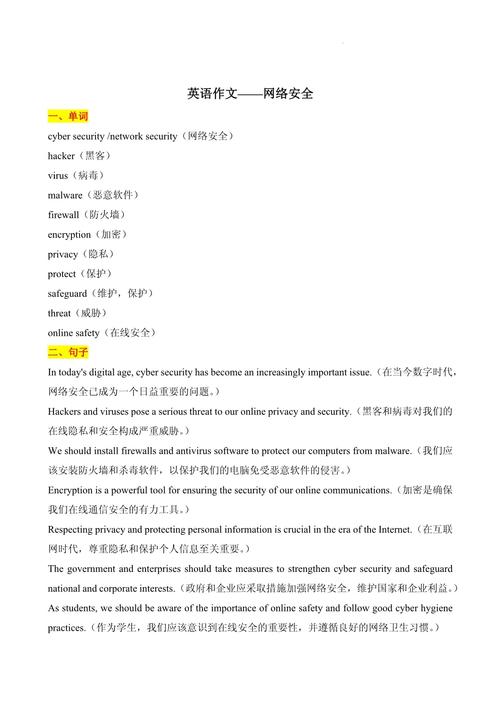
随着网络普及,网络安全风险日益凸显,掌握相关英语句子能帮助识别网络诈骗、保护个人信息。
个人信息保护
- "Do not share personal information like passwords, ID numbers, or bank details online."(切勿在网上分享密码、身份证号或银行信息等个人资料。)
场景:个人信息泄露可能导致身份盗用或财产损失。 - "Use strong passwords with a combination of letters, numbers, and symbols."(使用包含字母、数字和符号的强密码。)
场景:复杂密码更难被破解,提升账户安全性。 - "Enable two-factor authentication for important accounts."(为重要账户开启双重认证。)
场景:双重认证能额外验证用户身份,防止未授权登录。
网络诈骗防范
- "Be wary of emails or messages asking for urgent money transfers; they may be scams."(警惕要求紧急转账的邮件或信息,可能是诈骗。)
场景:诈骗常以“紧急情况”为由,诱骗受害者转账。 - "Do not click on suspicious links or download unknown attachments."(不要点击可疑链接或下载未知附件。)
场景:恶意链接可能植入病毒,盗取设备信息。 - "Verify the identity of the other party before sharing sensitive information online."(在网上分享敏感信息前,核实对方身份。)
场景:伪装成客服、朋友等身份的诈骗较为常见。
社交媒体安全
- "Adjust privacy settings to control who can see your posts and personal information."(调整隐私设置,控制谁能看到你的帖子和个人信息。)
场景:限制信息可见范围可减少隐私泄露风险。 - "Avoid sharing your location in real-time on social media."(避免在社交媒体上实时分享位置信息。)
场景:实时位置可能被不法分子利用,跟踪或威胁人身安全。
网络安全常用句子表
| 风险类型 | 英语句子 | 中文释义 |
|---|---|---|
| 密码安全 | Change passwords regularly and avoid using the same password for multiple accounts. | 定期更换密码,避免多个账户使用相同密码。 |
| 邮件诈骗 | Check the sender's email address carefully; scammers often use fake addresses. | 仔细检查发件人邮箱地址,诈骗者常使用虚假地址。 |
| 公共 Wi-Fi | Avoid accessing sensitive accounts on public Wi-Fi networks as they may be unsecured. | 避免在不安全的公共 Wi-Fi 网络上访问敏感账户。 |
应急处理
面对突发状况(如火灾、受伤、迷路等),掌握应急英语句子能快速寻求帮助或采取自救措施。
火灾应急
- "If there's a fire, stay low to the ground to avoid smoke inhalation."(发生火灾时,低姿前进避免吸入浓烟。)
场景:烟雾向上扩散,贴近地面空气较清新。 - "Call emergency services immediately and provide your exact location."(立即拨打急救电话并提供准确位置。)
场景:快速定位能提高救援效率。 - "Do not use elevators during a fire; use stairs instead."(火灾时切勿乘坐电梯,应走楼梯。)
场景:电梯可能因断电或火灾被困。
受伤急救
- "Apply direct pressure to a wound to stop bleeding."(直接按压伤口止血。)
场景:小伤口出血时的基础急救措施。 - "If someone is choking, perform the Heimlich maneuver."(有人噎住时,实施海姆立克急救法。)
场景:气道异物堵塞的紧急处理方法。 - "Call for medical help if the injury is severe or you are unsure how to handle it."(伤情严重或不确定如何处理时,寻求医疗帮助。)
场景:避免因不当处理加重伤情。
迷路或走失
- "If you get lost, stay in one place and call for help."(迷路时待在原地并呼救。)
场景:随意走动可能增加搜救难度。 - "Memorize important phone numbers, such as emergency contacts or local police."(记住重要电话号码,如紧急联系人或当地警方电话。)
场景:无网络时,电话求助是主要方式。
应急处理常用句子表
| 突发状况 | 英语句子 | 中文释义 |
|---|---|---|
| 火灾报警 | Fire! Fire! Call 911 immediately! | 着火了!快打911! |
| 医疗急救 | I need an ambulance. My address is [具体地址]. | 我需要救护车,我的地址是…… |
| 警情求助 | I'm in danger. Please send the police to [地点]. | 我有危险,请派警察到…… |
相关问答FAQs
Q1: 如何用英语向外国朋友提醒“出门前检查煤气是否关闭”?
A1: 你可以说:"Always check if the gas is turned off before leaving home." 或者更强调安全性:"Make sure the gas valve is closed properly when you go out to prevent gas leaks."(确保出门前煤气阀门关紧,防止煤气泄漏。)

Q2: 在国外遇到网络诈骗,如何用英语向警方描述情况?
A2: 可以这样表达:"I think I was scammed online. Someone sent me a fake email claiming to be from a bank, asking for my account details. I may have shared my personal information."(我可能遭遇了网络诈骗,有人发了一封冒充银行的虚假邮件,索要我的账户信息,我可能已经分享了个人信息。)随后提供具体细节,如诈骗者的邮箱地址、转账记录(如有)等,帮助警方调查。